Prophetic
180 Degrees
2 Kings 5:11-12 – “But Naaman went away angry and said, “I thought that he would surely come out to me and stand and call on the name of the Lord his God, wave his hand over the spot and cure me of my leprosy. 12 Are not Abana and Pharpar, the rivers of Damascus, better than all the waters of Israel? Couldn’t I wash in them and be cleansed?” So he turned and went off in a rage.”
As I read, prayed, and meditated on the Word of God today, two distinct words flooded my consciousness. Pride and Repentance. Biblical repentance is so much more than emotion or even a sense of guilt and shame. Biblical repentance is to do a 180-degree turn and go in the other direction. It is to change the mind. It involves demonstrable righteousness.
In 2 Kings 5, Naaman, the Syrian’s pride, almost kept him from healing. But he repented [changed his mind] and acted on the Word of the prophet. Healing came!
Many are crying out for a move or outpouring of the Holy Spirit in revival. That’s good, but no revival ever comes unless it is preceded by deep repentance.
Revival only comes when repentance is prevalent. Matthew 3:2 – “Repent for the kingdom of heaven is at hand.” In verse 8, John said, “Therefore bring forth fruit in keeping with repentance.” A changed life always accompanies repentance. No change, no repentance.
Matthew 3:10-11 reveals that repentance is also accompanied by the purging fire of the Holy Spirit. True repentance leads us to God. Pride drives us from God. When the heart is set to seek God, two doors become visible. It is either the door of Pride or the door of Repentance.
Remember James’s words: “Submit to God, resist the devil, and he will flee.” Notice the temptation of Jesus in the wilderness, as described in Matthew 4. He fasted and prayed for 40 days (Submitted to God). Then the devil came, and in each temptation, Jesus resisted with the Word of God. He resisted, and the devil departed from him. Then, something else happened. The angels came and began to minister to Him.
The message of John, Jesus, and the Acts Church was repentance. The message of every revival has been repentance. Repentance involves demonstrated righteousness. Repentance is to abandon self and seek God. Repentance is to put pride aside and surrender to God. Repentance is the door to revival, renewal, and restoration.
The call of the Holy Spirit is “Repent, for the kingdom of heaven is at hand.” Matthew 6:33 provides the pathway to God’s fullness! If we will set ourselves to seek and submit to God, three things will happen. The enemy will come to attack. If we resist, he will flee, and then the angels will come to strengthen us.
One more thought is from 2 Kings 4:1-7. The widow with the bottle of oil and Elisha. She prepared (borrowed containers for the oil). She poured (utilized what she had prepared). She exhausted her capacity (ran out of containers). The oil stopped flowing. She set her limit of blessing.
If we pursue God and repent with a transformed heart, we give God a vessel in which to pour His oil. The only limitation is the depth of our repentance and surrender. We set the limit of our revival. How much do you want?
May 180 Degrees from the Old Path, your targeted New Path!

The New Year’s Question We Must Ask

Romans 8:28 – “And we know that God causes all things to work together for good to those who love God, to those who are called according to His purpose.” NASB
The question to ask on this New Year’s Day – “What Are You Living For?” That may sound strange when connected to the text I have chosen for this topic, but if you will permit, I believe you will understand. I want to address the last words of that sentence, “to those who are called according to His purpose.” The focus is His Purpose, and that begs the question for each of us: “What Are We Living For?”
I heard a preacher reveal his technique for sharing his faith in witnessing using two straightforward questions. He would first ask, “What do you do for a living?” The responses are always the typical Doctor, Lawyer, Teacher, etc. We all do something or aspire to do something in life as a vocation. That opens the door, and then he asks, “What are you living for?” That is an entirely different world, and there is usually silence because most do not truly have a clear picture in their minds of what they are living for.
We are living for something, even if we do not know what it is or how to articulate it — what? Some people invest their entire lives pursuing wealth, some fame, some approval, some seeking love and to be loved. The question is valid: “What are you living for?” What is your purpose in life? What is it that keeps you moving from day to day, project to project, and venture to venture?
You are investing your life in something – what? The additional question is: will it be of eternal value or of temporal value? Jesus asked the disciples, “Who do men say that I am? What are people saying about me?” They gave a list of what they were hearing, and then He asked the pointed question, “But what about you? What do you believe about Me?” Peter gave the timeless answer of eternal value, “You are the Christ!”
That reality allowed Jesus to direct their thinking and lay before them His Purposes and the various paths they could choose. In a very real sense, He was saying, “Now that you know who I am, are you ready and willing to take up your cross and follow me?” He cautioned that the world would never understand what they were doing or why. He reminded them that they could turn to this world; it was an option. It was not a good one and would prove fatal, but they had the choice.
I heard a powerful sermon about Jesus’ life, and the list given would be considered a failure by most in this world. He was born in obscurity, never went to college, never owned property, never held public office, never wrote a book, and had neither a wife nor children. He made powerful enemies. He was crucified as a common criminal on a cruel cross. That is not a picture of the pathway to success in the eyes of the world and much of the church.
If you are pursuing a career, your reward is that career. However, if your life is the pursuit of a mission, you are laying up eternal treasures. Someone said, “A career is something you choose for yourself, but a mission is chosen for you by another.” The life pursuit called for in the Bible is never about careers but missions. The Bible is not opposed to careers; thank God, some have invested themselves in various occupations. The Bible is not against wealth; thank God for those who have amassed fortunes and invest them in people and God’s kingdom.
If we make our lives a Mission, we do not waste time as we do if we are only pursuing a career. Benjamin E. Mays offered some valuable insight: He wrote, “I have just one minute, only sixty seconds in it. Forced upon me – can’t refuse it, didn’t seek it, didn’t choose it, but it’s up to me to use it. I must suffer if I lose it, give an account if I abuse it. Just a tiny minute – but eternity is in it.”
C.T. Studd eloquently declared: “Only one life, ‘twill soon be past, Only, what’s done for Christ will last.” On this New Year’s Day, you may or may not make Resolutions, but I ask that you consider the eternal question – “What am I Living For?” I also pray that your response will become – “For the Purposes of God.” I also pray that your declaration will be more than an offering of piousness without purpose, but that you will become a Matthew 6:33 person and you will ‘seek first, Him and His purposes.’
I pray that 2026 will be the greatest year you have ever lived, and you will see more accomplished than your wildest dreams, hopes, and aspirations. Remember, “Only one life to live, ‘twill soon be past, Only, what’s done for Christ will last.”
Have a fantastic day and a fantastic year!
Tomorrow, A Brand-New Year is Here!

Jeremiah 29:11-14 – “For I know the plans I have for you,” declares the LORD, “plans to prosper you and not to harm you, plans to give you hope and a future. 12 Then you will call upon me and come and pray to me, and I will listen to you. 13 You will seek me and find me when you seek me with all your heart.” NIV
The context of this passage was the LORD speaking to Israel about their return from the Babylonian captivity, and that, after 70 years, there would be an awakening and God’s plan would be put into play. Israel would seek Him and find Him as they sought Him with their whole heart. As we come to the last day of 2025, my heart cries out for us to Look Forward rather than Backward.
God has plans for us individually and collectively, and those plans include a Hope and a Future! In any situation or at any time when people truly seek the LORD with a whole heart, He demonstrates His power and reveals Himself to them. He has promised that if we Seek Him, we will Find Him. He is not trying to hide from us or make knowing His will, plan, or purpose difficult or impossible to discern. It is in God’s interest for us to Know what He wants and then to do what He directs. Hiding that from us would not serve the purposes of the Kingdom.
Rather than looking back on the disappointments of 2025, let’s look toward the possibilities of 2026. Rather than lamenting over the failures of the past, let’s look toward the victories of the future. Tomorrow or tonight at 12:01 AM, the year 2026 will have fully begun, and God will still be God and His plan and purpose for our lives will still be real and possible.
There is nothing anyone or any power can do that will change that. The devil may try and will try to get you to lose focus on the prime objective and discourage you but resist his temptations and fix your focus squarely on the Throne of Heaven and the Lord Jesus Christ. Take these words in Jeremiah as your personal word from the Lord for 2026 and enter this New Year with HOPE, FAITH, ENTHUSIASM, and CONFIDENCE.
I dare say that none of us saw in totality what we wanted to see in the past year, although we may have seen some significant and wonderful things. The New Year affords us a somewhat clean slate, and we have the opportunity to begin on January 1, 2026, a journey of faith that will be the most exciting and productive year of our lives.
May God be with you as you go through your day!
Useful or Useless?

Exodus 4:10 – “Then Moses said to the Lord, “O my Lord, I am not an eloquent man, neither in the past nor since you have spoken to your servant, for I am slow of speech and slow of tongue.”
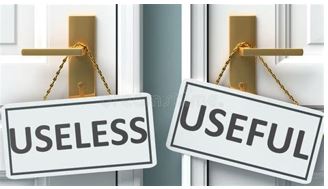
As I read, prayed, and meditated on the Word of God today, the words “useful and useless” filled my consciousness. That may sound strange, but it was the emphasis of the Spirit in my mind. All we are and do fall into one of those two categories.
I never cease to be amazed and amused by Moses in his wilderness encounter with God. His humanity was glaringly apparent. Forty years earlier, he envisioned being Israel’s deliverer. That plan failed, and for 40 years, he’s been in hiding.
Suddenly, God revealed Himself in an unusual way (that’s just like God). You would think that the burning but unburnt bush and the voice of God, as well as the signs, would have ended all resistance, but it didn’t.
In Exodus 4, after God details Moses’ assignment, Moses pushes back. This is the same Moses who was educated and trained in Egypt. A man powerful with words who said, in Exodus 4:10 – “I am not eloquent, neither heretofore nor since Thou hast spoken to Thy servant; for I am a stutterer and slow of speech.”
He has seen the miraculous signs, heard the voice of God Himself, and resists. God was not amused nor impressed. God said, “Who has made man’s mouth? Moses, stop this useless nonsense and be useful for a change! Trust Me!”
Peter’s life was a transition from useless self-focus to useful obedience. From the trial of Jesus until Pentecost, Peter was far more useless than useful. After Pentecost, he was consistently and persistently useful. He lost his FEAR!
Fear robs us. Fear of death or physical harm is a powerful emotion in humans. Uncertainty is terrifying to those who have not transitioned into a position and condition of Complete Trust. Fear of death, loss, religion, and failure are compelling forces in our lives.
To be useful rather than useless, we must SEE JESUS! See Him in our hearts and surrender all to Him. Remember, God uses what we have (Moses’ staff). Peter said, “Such as I have, I give.” What we have given to God makes us useful. Waiting for what we think we need makes us useless. What will we be?
LORD, help us to be useful, not useless for Your Kingdom!

Learning Complete Trust

Genesis 45:5 – “Now, do not be upset and do not be angry with yourselves because you sold me here, for God sent me ahead of you to preserve life!”
As I read, prayed, and pondered the Word of God today, the thought of ‘Complete Trust’ filled my mind. That means different things to different people, but what does it mean to God? What does God’s view of ‘Complete Trust’ look like? How is it demonstrated? How does it affect attitude and outlook? Do we have any examples other than Jesus?
In Genesis 41:16, Pharaoh had a second dream and called Joseph to interpret it. In the previous verse, he said, “I hear of you that you can interpret.” He had already done so years earlier. Joseph’s response speaks to his recognition of God’s sovereignty and his dependence on God. He said, “Not without God, I can’t.”
When Joseph’s brothers came to Egypt, and he revealed his identity, he said, (Genesis 45:5) – “Now don’t be grieved, nor displeased with yourselves, that you sold me here; for it was to provide for you that God sent me before you.”
That reveals ‘Complete Trust’ in God and a transformed heart free of every ounce of bitterness, with total forgiveness as a cornerstone.
Joseph’s ‘Complete Trust’ enabled him to fully forgive because he saw life through the lens of God’s purpose rather than as an individual event. It wasn’t about Joseph but the Kingdom of God. The events of life were classroom sessions of becoming. The people involved were just tools or vehicles. The real was the unseen in the spirit. Joseph’s ‘Complete Trust’ transformed his heart and shaped his outlook and worldview. Without it, he would have been retaliatory.
Joseph is a type of Christ, our provider! Jesus looks for ‘Complete Trust’ in all, and from all. Mark 12:28-31 is powerfully revelatory. The commandments obeyed and practiced reveal the heart and exhibit ‘Complete Trust.’
We will not give God ALL until we reach a state of ‘Complete Trust.‘ How can I value another person to that degree unless I see God’s purpose, promise, and provision?
Complete Trust eliminates all doubt and produces fruit. The parable of the fruitless fig tree in Mark 11, in the context of ‘Complete Trust’ and the commandments of Mark 12:28-31, reveals why Jesus was upset with a tree that looked fruitful but had only show and no produce. The life of ‘Complete Trust’ produces because in Trust it obeys, and out of that obedience and transformation of heart, fruit is natural.
Our goal is‘Complete Trust.’
LORD, help us to set our hearts to completely trust You in all things, and at all times!
 Roy's Covenant Corner