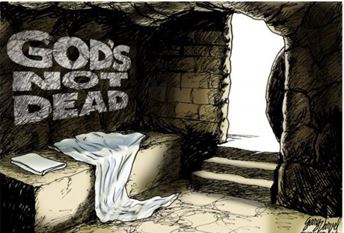
John 20:6-9 – “Then Simon Peter, who had been following him, arrived and went right into the tomb. He saw the strips of linen cloth lying there, 7 and the face cloth, which had been around Jesus’ head, not lying with the strips of linen cloth but rolled up in a place by itself. 8 Then the other disciple, who had reached the tomb first, came in, and he saw and believed. 9 (For they did not yet understand the scripture that Jesus must rise from the dead.)”
As I read, prayed, and pondered the Word of God today, several things moved me and captured my thoughts. The folded napkin in the tomb is meaningless in our Western culture, but not in Jewish culture.
The Gospel of John 20:7 tells us that the napkin, which was placed over Jesus’ face, was not thrown aside like the other grave clothes. The Bible takes an entire verse to tell us that the napkin was neatly folded and was placed at the head of that stony coffin.
Simon Peter arrived and went inside. He also noticed the linen wrappings lying there, along with the cloth that had covered Jesus’ head.
To understand the significance of the folded napkin, we must first grasp a bit about the Hebrew tradition of that time. The folded napkin had to do with the master and servant, and every Jewish boy knew this tradition. When the servant set the dinner table for the master, he ensured that it was exactly as the master wanted it. The table was furnished perfectly, and then the servant would wait, just out of sight, until the master had finished eating.
The servant would not dare touch the table until the master was finished. If the master were finished eating, he would rise from the table, wipe his fingers and mouth, clean his beard, and wad up the napkin and toss it onto the table. The servant would then know to clear the table. For in those days, the wadded napkin meant, “I’m finished.”
But if the master got up from the table, folded his napkin, and laid it beside his plate, the servant would not dare touch the table because the folded napkin meant, “I’m coming back!” The message was clear, but did Peter and John receive it immediately? Jesus always gives us signs of what He is about to do, but do we grasp them? Not always immediately.
After Jesus appeared to them, a transformation began in their hearts and minds. In the Upper Room, the full impact of His Promise and Purpose flooded their hearts.
The Holy Spirit was and is the Key. He is our direct connection to Jesus, and Jesus is our direct connection to the Father. Acts 1:8 gives the key to the fulfillment of the commission. He provides the power or energia to fulfill the purposes of God. He brings revelation and conviction to the heart.
Ephesians 5:18 reveals the infilling and compares it to being drunk. The word is pleroo (saturated). In Acts 2:15, Peter responded to the comparison of being drunk by saying, “You are right, they are drunk, just not on natural substance but with the Holy Spirit.”
In that saturation, they had the divine energia to work miracles and turn entire cities upside down for God. Their message was REPENT! Everything begins with repentance! Repentance opens the door. The Holy Spirit provides the power to be and do!
The ultimate evidence that Jesus arrived in heaven, poured His blood on the mercy seat in heaven, and the sacrifice for sin was accepted was the Day of Pentecost, the outpouring of the Holy Spirit. They were saturated, and in that energy, the church was born. But it was not a one-time experience. They were continuously filled.
Jesus came and is coming! We have a mission and a commission. We have the provision of power to be and do what He purposed.
Are we saturated? They became saturated by being united in purpose and in repentant prayer. Every time the Spirit was poured out, it was the same. Are we saturated?
Lord, we pray that You saturate us with Your Presence and Spirit, and enable us to become all You desire, impacting our world!
 Roy's Covenant Corner